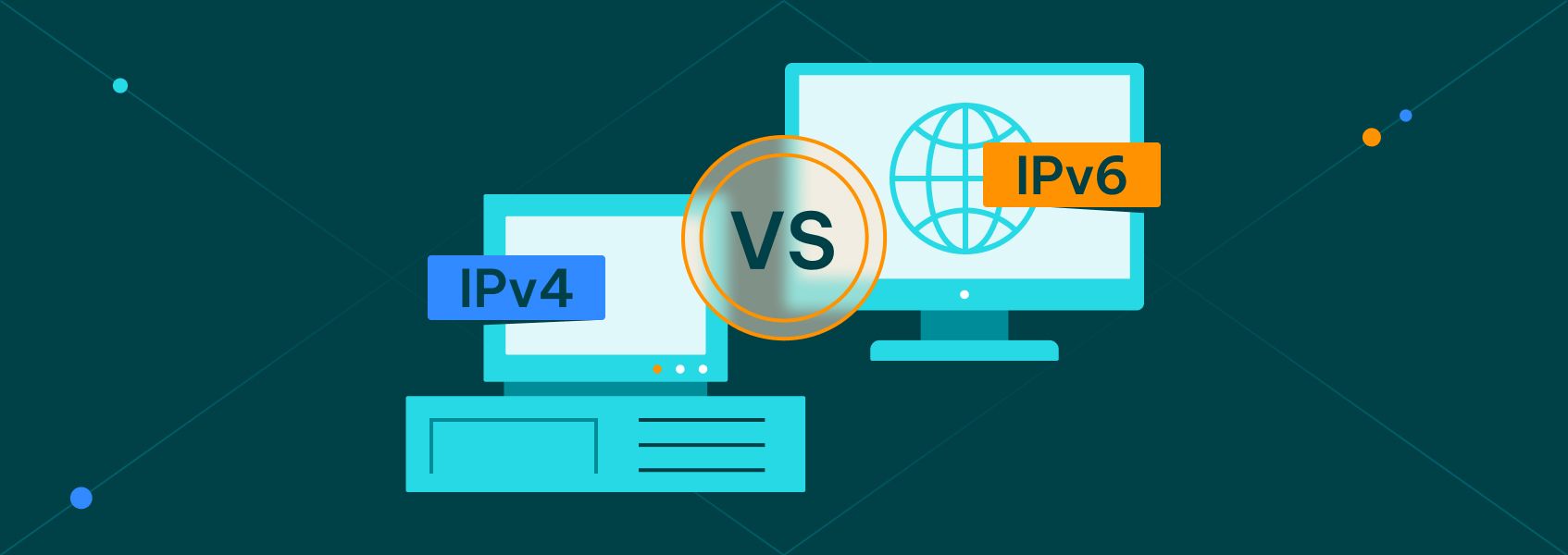
If you‘re involved in web scraping, large-scale automation, or other tasks that require rotating proxy servers, you‘ve probably noticed providers increasingly offering IPv6 proxy options alongside the traditional IPv4 type. Internet Protocol version 6 (IPv6) was created to succeed IPv4 way back in the late 1990s – so what‘s taken so long for it to catch on, and what are the benefits for web scraping and proxy-based automation?
In this ultimate guide, we‘ll dive deep into the key technical differences between IPv4 and IPv6, explore the advantages and drawbacks of each for web scraping, and provide clear recommendations on choosing the right proxy type for your needs. By the end, you‘ll have a thorough understanding of this often confusing topic and be equipped to integrate IPv6 proxies into your toolset if appropriate.
IPv4 and IPv6 101: A Technical Overview
Before we can compare IPv4 and IPv6 proxies, it‘s important to grasp how the underlying protocols function. An IP address serves as a unique identifier enabling devices to send and receive data over the internet or local network. IPv4 was the first widely deployed version, introduced in 1983, while IPv6 was developed in response to limitations of IPv4 that became apparent by the late 1990s.
IPv4 Address Format
An IPv4 address consists of 32 bits, typically written as four 8-bit decimal numbers (ranging from 0 to 255) separated by dots – this format is known as "dotted decimal notation". For example:
216.58.194.174
Since each group is 8 bits, the total number of possible IPv4 addresses is 2^32, or approximately 4.3 billion. While that sounds like a huge number, it‘s not nearly enough to cover the explosive growth of internet-connected devices.
IPv6 Address Format
To vastly expand the pool of available addresses, IPv6 utilizes 128-bit addresses, written as eight groups of four hexadecimal digits separated by colons. Leading zeroes in each group can be omitted, and a double colon can replace consecutive all-zero groups, like so:
2001:0db8::0001
This 128-bit scheme provides 2^128 or roughly 340 undecillion unique addresses (that‘s 340 followed by 36 zeroes) – enough to assign a unique address to every grain of sand on Earth! While we obviously don‘t need anywhere near that many, it provides plenty of room for internet growth without artificial scarcity.

As of mid-2023, global IPv6 adoption has surpassed 40% and continues to grow steadily. Countries like India, Germany and Belgium are leading the charge with over 60% IPv6 deployment, while the US lags behind at around 48%. Mobile carriers have been quicker to implement IPv6, with major networks like T-Mobile USA and Verizon Wireless reaching over 90% IPv6 traffic.
IPv4 vs IPv6: Key Differences Compared
Though they serve the same basic purpose, IPv4 and IPv6 have some significant differences impacting security, performance, and compatibility with web scraping tools. Let‘s break down the key factors:
| Factor | IPv4 | IPv6 |
|---|---|---|
| Address size | 32 bits | 128 bits |
| Notation | Dotted decimal | Hexadecimal |
| Max # of addresses | ~4.3 billion | ~340 undecillion |
| Header size | 20 bytes | 40 bytes |
| Checksum | Has checksum | No checksum |
| Packet fragmentation | Allowed | Only by source |
| Security | IPsec optional | IPsec mandatory |
| Quality of service | Via TOS field | Via traffic class & flow labels |
| Address config | Manual or DHCP | Auto or DHCPv6 |
| Local subnet | Broadcast | Multicast |
| Domain name resolution | A records (forward), PTR records (reverse) | AAAA records (forward), PTR records (reverse) |
As you can see, while IPv4 and IPv6 both use 4-octet (32-bit) blocks for subnetting and routing purposes, IPv6 offers a number of enhancements over IPv4:
- Massively expanded address space to accommodate IoT devices
- More efficient header structure and routing without checksums
- Eliminates the need for network address translation (NAT)
- Built-in IP Security (IPsec) for authentication and encryption
- Improved quality of service (QoS) mechanisms for traffic prioritization
- Autoconfiguration and mobility features to simplify network management
The catch is that IPv4 and IPv6 are not directly interoperable – IPv4-only hosts cannot communicate directly with IPv6-only hosts. That‘s why the transition from IPv4 to IPv6 has been gradual, with most networks running "dual stack" configurations supporting both protocols simultaneously and using transitional methods like protocol translation or tunneling when needed.
Advantages and Disadvantages of IPv4 and IPv6 for Web Scraping
Now that we understand the core technical differences, let‘s examine the pros and cons of using IPv4 vs IPv6 proxies for web scraping and automation.
IPv4 Proxy Advantages
- Better compatibility with older websites and networks
- Generally lower cost and more abundant supply
- More geotargeting locations available
- Faster connection speeds in some areas
IPv4 Proxy Disadvantages
- Many datacenter IPv4 ranges are blacklisted from heavy reuse
- Finite address pool increases recycling and potential blocking
- Less efficient routing and network translation required
- No built-in security, easier to spoof/intercept
IPv6 Proxy Advantages
- Harder for sites to track and ban due to massive address pool
- Improved security and traffic encryption with IPsec
- No network translation delays, better P2P connectivity
- Growing supplier availability and regional diversity
IPv6 Proxy Disadvantages
- Some conversion/compatibility issues with older scrapers
- Fewer geotargeting options (limited to country level)
- Marginally slower in areas with underdeveloped IPv6 routing
- Learning curve for novice proxy users

Real-world speed tests of proxies on major cloud platforms show IPv6 keeping pace with IPv4 in most regions, with a slight edge for IPv4 overall. As IPv6 infrastructure matures, expect performance to meet and likely exceed IPv4.
When to Use IPv4 or IPv6 Proxies for Web Scraping
With the above factors in mind, here are practical recommendations for when to choose IPv4 or IPv6 proxies for web scraping:
Stick with IPv4 proxies if:
- You‘re scraping older, IPv4-only sites or networks
- Your tools/integrations lack full IPv6 compatibility
- You need granular geolocation targeting (city level or below)
- Saving money is top priority and IPv4 prices are lower
Consider IPv6 proxies if:
- You‘re scraping newer, IPv6-compatible sites and apps
- Security and avoiding detection are primary concerns
- You‘re doing P2P scraping/automation requiring NAT bypass
- You‘re futureproofing and optimizing for long-term scalability
In most cases, using a mix of both IPv4 and IPv6 proxies in your pool is optimal, as you can direct traffic to the appropriate type based on target compatibility while reaping the benefits of IPv6 wherever possible.
How to Set Up and Use IPv6 Proxies
Once you‘ve chosen an IPv6 proxy provider (we‘ll share some top recommendations below), getting started is relatively straightforward. The key steps are:
-
Make sure your operating system and network support IPv6. Most modern OSes (Windows 10+, macOS 10.7+, Ubuntu 12.04+) have it enabled by default, but you can verify by checking your network connection settings or using an online IPv6 test tool.
-
Configure your web scraping tools or proxy manager to use the IPv6 proxy format provided by your supplier. Instead of IP:port combos like
127.0.0.1:80, you‘ll use the bracketed IPv6 address and port like[2001:0db8::1]:80. Be sure to include the brackets, which indicate an IPv6 address literal. -
If your scraping target uses IPv6-specific DNS records (AAAA records), update your scraper‘s DNS resolution settings to query them. Some tools automatically do this when an IPv6 proxy is detected, but others may require manual configuration to avoid fallback to IPv4.
-
Set your proxy type (HTTP, SOCKS4, SOCKS5) and authentication method as specified by the provider. Most IPv6 proxy services use the same protocols and support the same authentication options as IPv4 proxies for easy migration.
-
Start your scraper and monitor the connection for any IPv6-related errors. If you encounter issues, double-check your proxy formatting and authentication, and consider contacting your provider‘s support for help. Most leading providers are knowledgeable about IPv6 setup quirks.
With your IPv6 proxies integrated, you can enjoy the security, speed and scalability benefits while also keeping a foot in the familiar world of IPv4 as needed.
Top IPv6 Proxy Providers for Web Scraping
These established proxy services offer reliable, high-performing IPv6 proxies suitable for a range of web scraping and automation projects:
-
Bright Data – With a huge global network and advanced self-service tools, Bright Data‘s IPv6 proxy pool spans over 100 countries for flexible geotargeting. Clean, fast proxies for even the most demanding scraping jobs.
-
IPRoyal – This newer player uses a distributed peer-to-peer infrastructure to deliver affordable IPv6 and IPv4 proxies with low detection risk. Decent speeds, solid support and a choice of residential/datacenter plans.
-
Proxy-Seller – A well-rounded option with customizable IPv6 proxy packages for different use cases. Good connection quality, user-friendly tools and helpful customer service at a fair price point.
-
SOAX – Known for their ethically-sourced residential proxies, SOAX‘s IPv6 offering is great for device or ISP-specific targeting. Flexible plans and an intuitive API simplify proxy management.
-
Smartproxy – This provider‘s IPv6 proxies are optimized for sneaker and retail web scraping, with city/state targeting in 8 countries and ASN-level filtering. Easy integration with common bots and CR tools.
Whichever provider you choose, look for IPv6 proxy specs that match your scraping task (rotation settings, transfer limits, targeting) and be willing to test different options. Many offer limited free trials or money-back guarantees to let you verify real-world performance.
Frequently Asked Questions about IPv6 Proxies
Let‘s wrap up by addressing some common questions and concerns about using IPv6 proxies for web scraping:
Are IPv6 proxies better than IPv4 for web scraping?
It depends on your specific scraping target and requirements. IPv6 proxies offer some advantages like greater anonymity and no NAT, but IPv4 proxies still work better for older sites. Use both when possible to combine the benefits.
Will IPv6 proxies prevent IP blocking?
Using IPv6 proxies can help avoid IP bans because the massive address pool makes suspicious activity harder to track. However, sites may still block IPv6 ranges known to belong to proxy services, so don‘t rely solely on IPv6 for ban prevention.
How much do IPv6 proxies cost compared to IPv4?
The price gap between IPv4 and IPv6 proxies has shrunk as more providers build out IPv6 support. Expect to pay similar or slightly higher rates for IPv6 residential proxies, while IPv6 datacenter proxies may cost less due to reduced demand and more supply.
Can I use free IPv6 proxies for web scraping?
While free IPv6 proxy lists exist, their quality and reliability are questionable at best. For large-scale scraping where performance matters, investing in a reputable paid proxy service is advisable. Free proxies are more likely to steal your data or infect your system with malware.
How do I test if a website supports IPv6?
To check if a site is reachable via IPv6, enter its domain name into an IPv6 connectivity checker tool like IPv6 Test or Ready for IPv6. If the tool shows an IPv6 address (starting with "2001:"), the site has an IPv6 presence.
The IPv6 Proxy Advantage for Web Scraping
As the internet transitions from IPv4 to IPv6, forward-thinking web scrapers are adopting IPv6 proxies to gain an edge over the competition. By tapping into the vast, underutilized IPv6 address space, you can reduce proxy detection, improve success rates, and increase your concurrent thread count.
We‘ve covered the key considerations for choosing and implementing IPv6 proxies, including:
- Technical comparisons of IPv4 and IPv6 protocols
- Pros and cons of each proxy type for web scraping
- Decision factors for IPv4 vs IPv6 proxy selection
- Setup steps for smooth IPv6 proxy integration
- Top-rated IPv6 proxy providers for various scraping needs
Armed with this knowledge, you‘re ready to harness the power of IPv6 proxies and scale your web scraping like never before. Choose a trusted provider, begin testing IPv6 proxies for your target sites, and optimize your proxy mix for maximum performance and efficiency.
The IPv6 future is here – are your web scraping proxies ready?